

Why Collaborative Divorce Can Benefit LGBTQ Couples
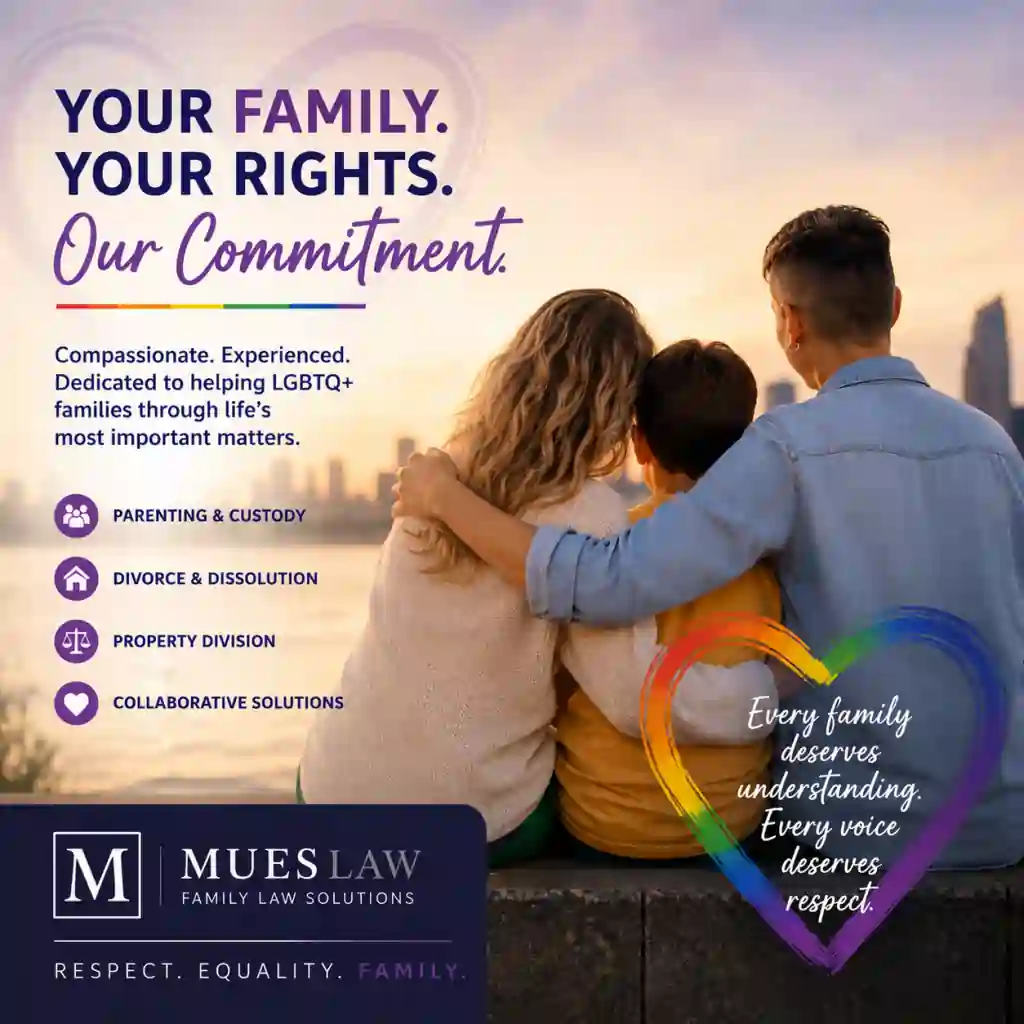 In recognition of June being Gay Pride month, I believe it is worthwhile to share this blog about some of the unique issues that LGBTQ individuals face when ending a marriage, and also to express why taking a collaborative approach is recommended.
Ending a marriage is never easy, but LGBTQ divorce in Ohio can involve additional legal and emotional complexities that many opposite-sex couples do not face. Although same-sex marriage has been recognized nationwide since Obergefell v. Hodges (2015), many LGBTQ spouses built long-term relationships before they were legally permitted to marry. The gap between lived reality and legal recognition has lasting impacts on how Ohio courts handle property division, spousal support, and parental rights in LGBTQ divorces.
1. Legal Recognition and the Length of Marriage in LGBTQ Divorce in Ohio
One of the most important issues in LGBTQ divorce in Ohio is determining how courts evaluate the length of a marriage when a couple shared a life together before same-sex marriage became legally recognized. Ohio courts typically measure marital property and spousal support based on the length of the legal marriage. But for many same‑sex couples, the legal marriage date does not reflect years – or even decades – of shared life, finances, and responsibilities. Read more here.
A recent Ohio Supreme Court case C.E. v P.S. (2026) held that Ohio courts cannot retroactively treat same-sex couples as if they were married prior to 2015, even if they were functionally married. This holding may complicate a divorce, as shared assets and a shared life for years prior to 2015 may not be legally recognized as marital property. Collaboration and cooperation are important in every divorce. For same-sex couples who built a life together prior to 2015, being collaborative during a divorce may save spouses from losing property or assets they otherwise would have been entitled to had same-sex marriage been legalized earlier.
2. Transgender Identities During Divorce
While divorce is often emotionally charged, adding the extra factor of a transitioning spouse can cause emotions to elevate. While there is increasing attention on the issue, there is little legal protection when it comes to disparate treatment based on gender identity during a divorce.
A case out of Washington (In Re Marriage of Magnuson) held that a court may consider a parent’s gender identity as a factor when determining child custody rights during a divorce. While not binding in Ohio, this holding reflects the stigmas surrounding transgender parents throughout the United States. This ruling serves as an example of potential disparate treatment that a transgender parent may receive when determining child custody arrangements. Cooperation during divorce is key, and custody arrangements should reflect the child’s best interest, regardless of the identity of the child’s parent.
These legal limitations can create unique property division concerns during an LGBTQ divorce in Ohio, particularly for couples who accumulated assets before marriage equality became law.
3. Parental Rights to Nonbiological Parents
For same-sex couples wanting children, many decide to conceive through artificial insemination. Read more about a recent Supreme Court case (C.E. v. P.S.) influencing the rights of unmarried parents. Legal parentage in Ohio can be established through a natural mother giving birth to the child, an acknowledgment of paternity, or through a legal adoption. Under Ohio’s artificial insemination statutes, the spouse of a married woman who gives birth as a result of artificial insemination is the assumed legal parent to the child.
In a divorce, non-biological parents may have barriers to parental rights if the child was conceived prior to the marriage and there was no legal adoption. This holding may impact the rights of same-sex couples who built families prior to Obergefell, and are now deciding to divorce without first securing the rights of the nonbiological parent.
When a same-sex couple divorces, a nonbiological parent that is not a legal parent may face a loss of rights to custody and visitation of the child. It is important for same-sex parents to understand the legal processes that are necessary to secure each parents’ rights in the event of a divorce. Again, collaboration and putting the child’s best interest first should be at the center of every divorce.
Final Thoughts
LGBTQ divorce in Ohio is characterized by a patchwork of evolving law, and the lingering effects of decades without marriage equality. Whether the issue is dividing property or determining child custody, LGBTQ couples may face barriers that heterosexual couples rarely encounter. Remembering to stay cooperative with your spouse is imperative to getting the best outcome possible for everyone in a divorce – especially for same-sex couples where the law does not protect certain rights.
Ultimately, anyone facing an LGBTQ divorce in Ohio should understand their legal rights, explore available protections, and seek experienced legal guidance to help secure the best possible outcome for their family.
Frequently Asked Questions About LGBTQ Divorce in Ohio
Can same-sex couples get divorced in Ohio?
Yes. Since same-sex marriage is recognized nationwide, Ohio courts grant divorces for legally married same-sex couples under the same laws that apply to opposite-sex couples.
Does Ohio recognize a same-sex relationship before marriage for divorce purposes?
Generally, Ohio courts calculate the length of a marriage based on the legal marriage date. Recent court decisions have limited the ability of courts to treat couples as married before same-sex marriage became legally recognized.
Can a nonbiological parent seek custody rights in Ohio?
Possibly. However, parental rights often depend on legal parentage, adoption, or other legal protections. A nonbiological parent may face challenges if legal parentage was never established.
Can a transgender parent lose custody because of their gender identity?
Ohio courts are required to focus on the best interests of the child. However, custody disputes involving transgender parents can present unique legal and emotional challenges that often require careful legal guidance.
Is collaborative divorce a good option for LGBTQ couples?
Collaborative divorce can help LGBTQ couples resolve disputes regarding property, support, and parenting issues in a private and cooperative setting without extensive court involvement.
Individuals facing an LGBTQ divorce in Ohio, including those in Dayton, Montgomery County, Greene County, Clark County, and Warren County, should understand how evolving family law may affect their rights and responsibilities.
Publisher’s Note:
I want to thank Rachel Zagorski for writing this post! Rachel is clerking with MuesLaw for the Summer. She will be starting her final year at the University of Dayton School of Law in the Fall. We are glad you are working with us! You did an excellent job on this blog post!
MuesLaw Provides Experienced, Trusted and Professional Advice if You Are Considering Ending Your Marriage.
Our team can help you to protect your interests and move forward peacefully. MuesLaw can assist you with your divorce, dissolution and parenting/custody related issues. To learn more, please go to our website at mueslaw.com or call us at (937) 293-2141. We can schedule an in-person conference or one by phone or Zoom. We look forward to assisting you!
Please consider joining or following us!


© 2026, Ohio Family Law Blog. All rights reserved.

Attorney Robert “Chip” Mues has been focusing his legal practice throughout Southwest Ohio primarily in divorce and family law matters since 1978. Chip is passionate about family law and has proudly published the Ohio Family Law Blog since 2007. In addition, he previously managed the Dayton law firm of Holzfaster, Cecil, McKnight & Mues LPA until it dissolved on December 31, 2024. He founded MUESLAW in 2025. To learn more about him or MUESLAW, visit www.MuesLaw.com. Appointments are available in person, over the phone or by Zoom. Call us at 937 293-2141. He can be contacted by email at chip@mueslaw.com.