
Ohio Same-Sex Parental Rights Artificial Insemination Under Ohio Law
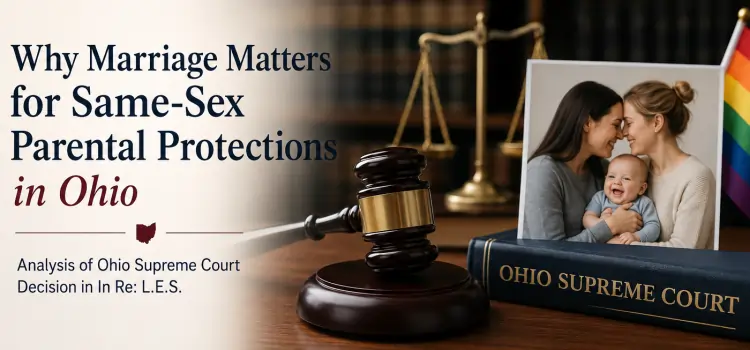
 The Ohio Supreme Court issued a significant ruling on April 28, 2026, clarifying how parental rights are established for same-sex couples using artificial insemination. The Ohio Supreme Court recently clarified issues surrounding Ohio same-sex parental rights artificial insemination in a significant decision involving unmarried same-sex parents and the application of Ohio’s parentage statutes. Click here to read the full decision, which highlights a critical takeaway for LGBTQ+ families in the state: legal marriage remains the primary gateway to securing automatic parental protections under Ohio’s artificial insemination statutes.
The Case: C.E. v. P.S.
The ruling stems from a custody dispute between two women, identified as C.E. and P.S., who were in a long-term relationship before the U.S. Supreme Court’s 2015 Obergefell v. Hodges decision legalized same-sex marriage nationwide. During their relationship, P.S. (the biological mother) gave birth to children conceived through artificial insemination. This dispute highlights how Ohio same-sex parental rights artificial insemination issues often arise when unmarried partners seek recognition as legal parents after separation. The couple never legally married, though they had the opportunity to do so in other states where it was legal at the time.
After the couple separated in 2015, C.E. (the non-biological parent) sought legal parental rights. She argued that she should be granted the same protections as a married spouse under Ohio’s artificial insemination laws, asserting that the couple “would have been married” had it been legal in Ohio at the time of the children’s births.
The Court’s Ruling
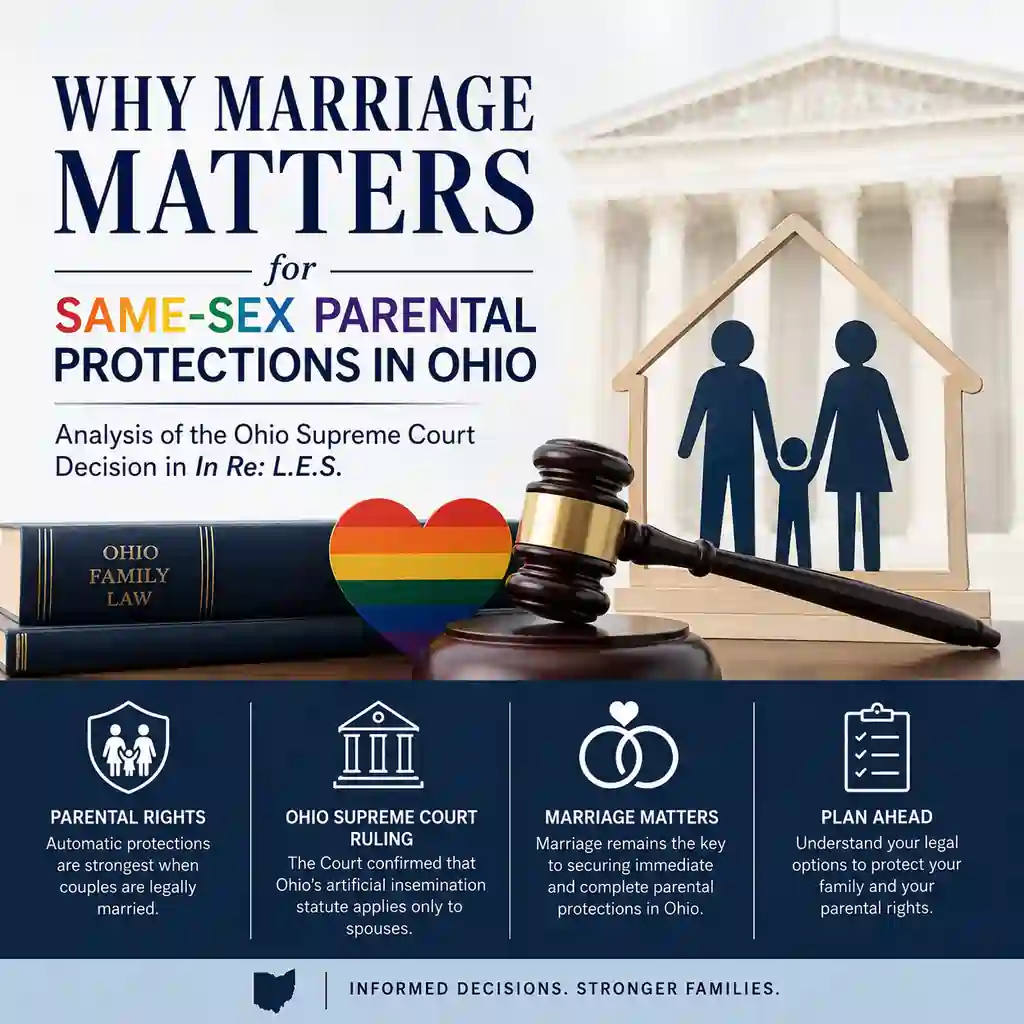
Writing for the majority, Justice DeWine explained that Ohio’s artificial insemination statute (R.C. 3111.95(A)) is specifically designed to apply to “spouses.” Because C.E. and P.S. were never legally married, the Court ruled that C.E. could not use that specific statute to establish parentage. The Court’s interpretation reinforces that Ohio same-sex parental rights artificial insemination protections are tied directly to marital status under Ohio’s statutory framework.
The Court addressed two key legal points:
- Marriage as a Prerequisite: While the U.S. Supreme Court cases Obergefell and Pavan v. Smith ensure that same-sex couples have equal access to marriage and the “constellation of benefits” that come with it, the Ohio Supreme Court clarified that these cases do not require the state to extend those same benefits to unmarried couples.
- Rejection of the “Would Have Been Married” Standard: The Court declined to adopt a standard requiring judges to determine whether a couple intended to marry but were prevented by law. The Court noted that such an inquiry would be “unworkable” and would essentially revive common-law marriage, which has been prohibited in Ohio since 1991.
What This Means for Ohio Couples
This ruling serves as a vital reminder for same-sex couples in Ohio who are planning to grow their families through reproductive technology. Under current Ohio law, the artificial insemination statute provides a streamlined way for a non-biological parent to be recognized as a legal parent from birth-but this protection is strictly tied to marital status. If a couple is legally married and both consent to the artificial insemination procedure, the non-biological spouse is recognized as the natural parent.
For unmarried couples, the legal path to parental rights is significantly more complex and may require alternative legal arrangements, such as second-parent adoption, to ensure both parents are fully protected.
For families navigating Ohio same-sex parental rights artificial insemination, this ruling provides clarity but also highlights the limitations faced by unmarried couples.
The Bottom Line
For same-sex couples in Ohio, the most straightforward way to ensure both partners have immediate, recognized parental rights when conceiving through artificial insemination is to ensure they are legally married prior to the birth. As this case demonstrates, the courts are unlikely to retroactively apply spousal protections to couples who are not legally wed, regardless of the relationship’s length or commitment.
Ultimately, Ohio same-sex parental rights artificial insemination protections in Ohio are strongest when couples are legally married before the birth of the child, ensuring automatic recognition under state law.
Frequently Asked Questions
What did the Ohio Supreme Court decide about same-sex parental rights in artificial insemination cases?
The Ohio Supreme Court held that Ohio’s artificial insemination statute applies only to spouses. This means that unmarried same-sex partners cannot automatically establish parental rights under that law.
Does marriage affect parental rights in Ohio for same-sex couples using artificial insemination?
Yes. The Court confirmed that legal marriage is the key factor in determining automatic parental rights under Ohio’s artificial insemination statute. Without marriage, additional legal steps are required.
Can a non-biological parent in Ohio still obtain parental rights without being married?
Yes, but not automatically. Unmarried partners may need to pursue legal options such as second-parent adoption or other court orders to establish parental rights.
What is the significance of the In re L.E.S. Ohio Supreme Court decision?
The decision clarifies that Ohio law does not extend spousal-based parental protections to unmarried couples, even in long-term same-sex relationships, and rejects “would-have-been married” arguments.
What should same-sex couples in Ohio do before having a child through artificial insemination?
The safest legal step is to be legally married before the child is born, ensuring both partners receive automatic parental recognition under Ohio law.
Publisher’s Note:
 I want to thank April Erion, who just completed her second year at the University of Dayton School of Law, for helping write this article! April just finished clerking with us for the semester, but will hopefully be returning to MuesLaw for the fall semester. April is extremely smart and talented writer! We will miss you this summer April!
Our experienced Dayton family law team at MUESLAW can assist you with your dissolution, divorce or same-sex marriate related issues. To learn more, please go to our website at mueslaw.com or call us at (937) 293-2141. We can schedule an in-person conference or one by phone or Zoom. We look forward to assisting you!
Please consider joining or following us!


© 2026, Ohio Family Law Blog. All rights reserved.

Attorney Robert “Chip” Mues has been focusing his legal practice throughout Southwest Ohio primarily in divorce and family law matters since 1978. Chip is passionate about family law and has proudly published the Ohio Family Law Blog since 2007. In addition, he previously managed the Dayton law firm of Holzfaster, Cecil, McKnight & Mues LPA until it dissolved on December 31, 2024. He founded MUESLAW in 2025. To learn more about him or MUESLAW, visit www.MuesLaw.com. Appointments are available in person, over the phone or by Zoom. Call us at 937 293-2141. He can be contacted by email at chip@mueslaw.com.