

What to Do If You Suspect Technology-Facilitated Abuse
 October is Domestic Violence Awareness Month. It is a time to recognize the devastating impact domestic violence has on individuals and families – and to remind survivors that help is available. But domestic violence does not always happen behind a closed door.
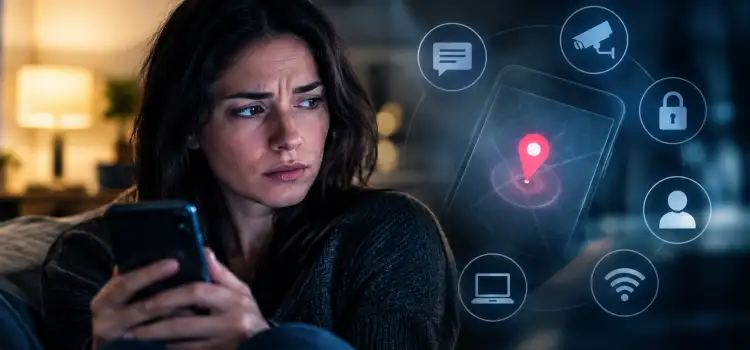
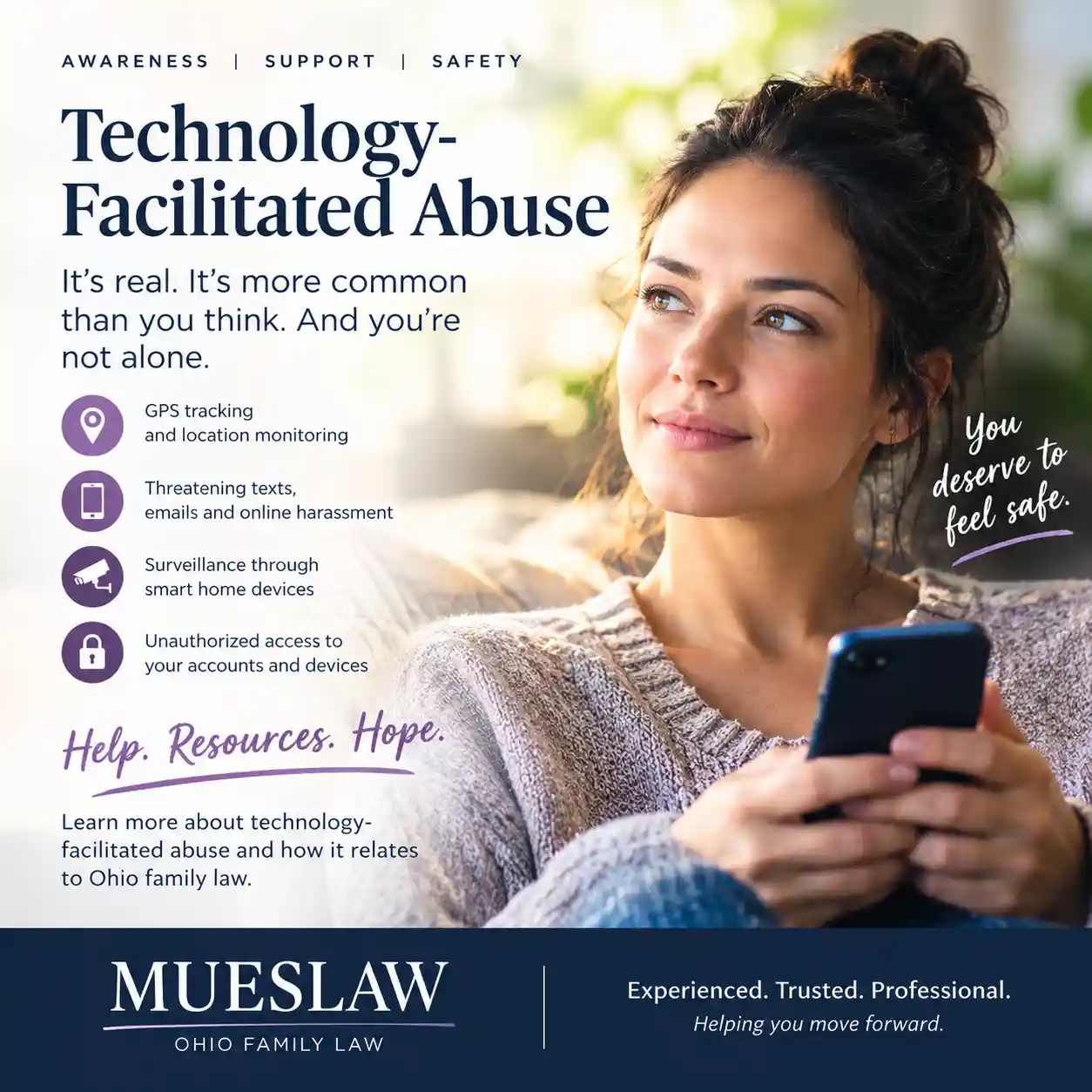
Increasingly, technology has become another tool used to intimidate, monitor, threaten, isolate, and control a partner. This behavior, known as technology-facilitated abuse, can involve phones, social media, GPS trackers, and connected devices. It is an emerging concern in domestic violence and deserves much more attention.
The Numbers Are Difficult to Ignore:
Domestic violence remains an enormous problem in the United States.
According to the Centers for Disease Control and Prevention’s most recent National Intimate Partner and Sexual Violence Survey, more than 1 in 3 women (34%) – nearly 43.5 million women – have experienced contact sexual violence, physical violence, and/or stalking by an intimate partner during their lifetime. Among men, more than 1 in 6 (17%), or approximately 20.7 million men, have experienced one or more of those forms of intimate-partner violence.
The problem is not merely national or theoretical.
In Ohio, law enforcement responded to 68,796 domestic disputes in 2023, according to statistics reported by the Ohio Bureau of Criminal Investigation. More than 34,000 of those incidents resulted in a domestic-violence charge or consent-order filing.
And behind those numbers are individual people and families trying to navigate some of the most difficult circumstances imaginable.
What Is Technology-Facilitated Abuse?
Technology-facilitated abuse is the use of technology or digital platforms to intimidate, monitor, threaten, harass, or control a current or former partner. It can involve location tracking, unauthorized account access, threatening messages, online impersonation, or connected devices used for surveillance.
The National Domestic Violence Hotline describes examples that can include threatening or harassing texts and emails, impersonating a partner online, monitoring a person’s phone, tracking their location, and using connected devices to surveil or control them.
The technology itself is not necessarily the problem.
The problem is how someone uses it to exercise power and control over another person.
Examples of Technology-Facilitated Abuse:
- A partner repeatedly demands to know where you are and uses your phone’s location-sharing function to monitor you.
- A former partner tracks your vehicle or belongings with a GPS device.
- Someone gains access to your email or social-media accounts.
- An abusive partner repeatedly sends threatening or intimidating text messages.
- Someone creates a fake social-media account in a victim’s name.
- A person uses smart-home technology – such as cameras, doorbells, locks, lights, or thermostats – to monitor or control someone inside the home.
- A former partner threatens to distribute private photographs.
- Someone uses information posted online to determine where a former partner lives, works, or spends time.
None of these behaviors require the abuser to be physically present. That is part of what makes technology-facilitated abuse so concerning!
Technology Can Make It Difficult to Escape Abuse
Technology is now woven into nearly every part of our lives.
Our phones contain our communications, photographs, calendars, financial information, location data, social-media accounts, and connections to family and friends. Our homes may contain internet-connected cameras, speakers, thermostats, locks, and other devices.
For someone experiencing domestic violence, that connectivity can create additional vulnerabilities.
The National Domestic Violence Hotline warns that phones and computers can potentially be monitored without the user’s knowledge, GPS trackers can be placed on vehicles or belongings, and information posted online can make it easier for an abusive person to locate someone.
Even seemingly harmless technology can become part of a pattern of control.
That is why technology should be considered when creating a domestic-violence safety plan.
How Technology-Facilitated Abuse Affects Ohio Family Law
As a family-law office, we see an important connection between technology-facilitated abuse and the issues that arise in divorce and family-law cases.
Technology-facilitated abuse can become relevant in Ohio divorce and family-law proceedings when digital records help document threats, stalking, harassment, or controlling behavior. Depending on the circumstances, text messages, emails, location records, and other electronic evidence may help establish a pattern of conduct.
Technology can create evidence.
Text messages, emails, photographs, social-media posts, call logs, location information, and other digital records may help establish a pattern of conduct. The Hotline specifically recommends preserving digital evidence when it can be done safely, including screenshots, messages, emails, call records, and voicemails.
But technology can also create danger.
A person preparing to leave an abusive relationship may need to consider whether their phone, email, social-media accounts, vehicle, or home devices are being monitored.
That means safety planning should not necessarily stop at changing the locks.
It may also mean changing passwords, reviewing location-sharing settings, examining connected devices, considering account security, and thinking carefully about what information is being shared online.
Importantly, safety should come before evidence collection. A survivor should not put themselves in greater danger simply to preserve a screenshot or obtain digital evidence.
Technology-Facilitated Abuse Is Still About Power and Control.
It can be tempting to think of domestic violence as only physical violence. That is too narrow. Domestic violence can involve intimidation, threats, stalking, isolation, financial control, emotional abuse, and other conduct designed to exercise power over another person.
Technology can simply provide another avenue for those behaviors. A person who uses a phone to monitor a partner’s location is still engaging in controlling behavior. A person who repeatedly threatens a former partner through text messages is still making threats. A person who uses a smart-home camera to monitor a former partner is still engaging in surveillance. The fact that the conduct occurs through a screen does not necessarily make it less serious.
What Should You Do If You Think Technology Is Being Used Against You?
There is no one-size-fits-all safety plan.
If you believe a partner or former partner is monitoring your technology, consider speaking with a domestic-violence advocate before making major changes to your devices or accounts. An advocate can help you think through the safest way to proceed.
The National Domestic Violence Hotline offers safety-planning resources and advocates who are available 24 hours a day.
Recognizing technology-facilitated abuse is an important part of understanding modern domestic violence. Whether the conduct involves GPS tracking, digital surveillance, online threats, or connected home devices, people experiencing abuse deserve access to safe, informed support.
For those in the Dayton and Miami Valley area, Artemis Center is an especially important local resource.
Artemis Center has served the community since 1985 and reports that it has helped more than 140,000 victims of domestic and sexual violence and their children through crisis intervention, safety planning, education, and support.. Its 24-hour domestic violence hotline is 937-461-HELP (4357).
You do not have to wait until a situation becomes an emergency before seeking information or assistance.
Domestic Violence Awareness Month gives us an opportunity to talk about domestic violence in all of its forms – including the forms that may not leave a visible injury.
Technology has changed the way we communicate. Unfortunately, it has also changed some of the ways an abusive person can exercise power and control.
Understanding Technology-Facilitated Abuse is an important first step.
If you or someone you know is experiencing domestic violence, stalking, threats, or technology-facilitated abuse, consider reaching out to a qualified domestic-violence advocate and, when appropriate, an experienced family-law attorney.
You do not have to figure it out alone.
For those in the Dayton area, I strongly encourage you to learn more about the work of Artemis Center and the resources it provides to survivors and their families. They can be reached at 937-461-HELP (4357) at their 24-hour-a-day Hotline.
Domestic Violence Awareness Month is about more than wearing purple. It is about recognizing abuse, supporting survivors, and making sure people know where to turn for help.
Experienced, Trusted and Professional Dayton Divorce Lawyers
MuesLaw can assist you with your divorce or dissolution related issues. To learn more, please go to our website at MuesLaw.com or call us at 937 293-2141. We can schedule an in-person conference or one by phone or Zoom. We look forward to assisting you!
PUBLISHER’S NOTE:
I want to thank Ben Murakowski for writing this important blog post about Technology-Facilitated Abuse! We are excited that Ben is clerking with MuesLaw. Ben is now in his third and final year at the University of Dayton School of Law. You will be reading more from Ben in the weeks and months to come, as Ben will be staying on working with MuesLaw this Fall semester too! Well done, Ben!
Please consider joining or following us!


© 2026, Ohio Family Law Blog. All rights reserved.

Attorney Robert “Chip” Mues has been focusing his legal practice throughout Southwest Ohio primarily in divorce and family law matters since 1978. Chip is passionate about family law and has proudly published the Ohio Family Law Blog since 2007. In addition, he previously managed the Dayton law firm of Holzfaster, Cecil, McKnight & Mues LPA until it dissolved on December 31, 2024. He founded MUESLAW in 2025. To learn more about him or MUESLAW, visit www.MuesLaw.com. Appointments are available in person, over the phone or by Zoom. Call us at 937 293-2141. He can be contacted by email at chip@mueslaw.com.