

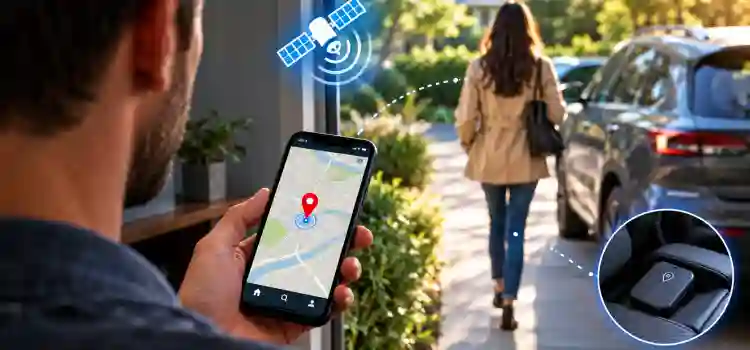
What Does Ohio’s Tracking Law Prohibit?
Quick Answer: Ohio’s tracking law, R.C. 2903.216, generally prohibits knowingly using a tracking device or tracking application to track another person or their property without consent, subject to statutory exceptions. Importantly for divorcing spouses, consent previously given to tracking is presumed revoked when one spouse files for divorce or a petition for dissolution of marriage, and the statute generally provides 72 hours after service to uninstall or discontinue the tracking technology.
 Ohio’s tracking law, Section 2903.216, may affect spouses going through divorce or dissolution. The law addresses the use of tracking devices and tracking applications and can become particularly important when a marriage is ending. The March 20, 2025 law specifically added provisions addressing divorce and dissolution, including the effect of a divorce complaint or dissolution petition on previously given consent to tracking. Read more about Ohio’s tracking statute, Section 2903.216.
Divorce and dissolution proceedings increasingly involve technology. Smartphones, vehicle apps, GPS devices, family-location applications, and other technology can make it possible to know where another person – or their property – is located.
For spouses going through a divorce or dissolution in Ohio, however, the use of tracking technology can create serious legal issues.
Ohio law now specifically addresses the unauthorized use of tracking devices and tracking applications. For families navigating the end of a marriage, understanding these rules is particularly important because conduct that may have been tolerated during a marriage can become unlawful once a divorce or dissolution proceeding begins.
Ohio Tracking Law: Can You Track Another Person Without Consent?
The law generally prohibits a person from knowingly installing a tracking device or tracking application on another person’s property without that person’s consent, or from using such technology to track another person or their property without consent.
The law also addresses situations where consent was originally given but later withdrawn. Once consent is revoked, the person using the tracking technology generally must remove or discontinue its use.
A “tracking application” includes software that allows someone to remotely determine or track another person’s location or movement. A “tracking device” includes electronic or mechanical technology capable of remotely determining or tracking the location or movement of a person or property.
That can potentially encompass technology that spouses may encounter in everyday life, including GPS tracking devices and location-tracking applications.
What Happens Under Ohio’s Tracking Law When a Spouse Files for Divorce?
One of the most significant provisions for divorcing Ohio couples concerns consent between spouses.
The law provides that when spouses have previously consented to tracking and one spouse files a complaint for divorce or a petition for dissolution, that consent is presumed to have been revoked.
The spouse who had been given permission to use the tracking technology generally has 72 hours after being served with the divorce complaint or dissolution petition to lawfully uninstall or discontinue the tracking device or application.
If the person cannot lawfully uninstall or discontinue the tracking technology, the law requires that person to notify the court in writing.
This creates an important practical distinction:
Permission to track a spouse during a marriage does not necessarily mean permission continues after the divorce process begins.
What About a GPS Tracker on a Family Vehicle?
This is where the Ohio’s tracking law can become particularly important in divorce cases.
The statute contains an exception for certain vehicle owners and lessees. An owner or lessee may install or direct the installation of a tracking device or application on a vehicle during the period of ownership or lease, subject to conditions specified by the statute. Those conditions include removing the device before transferring title or expiration of a lease, unless another statutory exception applies.
Consequently, simply discovering a GPS device on a vehicle does not necessarily establish that the device was unlawfully installed. Ownership, possession, consent, and the circumstances surrounding the installation can all matter.
Divorcing spouses should therefore avoid assuming that every tracking device is automatically illegal – or that ownership of a vehicle automatically permits every form of tracking.
What Does Ohio’s Tracking Law Say About Tracking Children?
The law contains specific exceptions concerning parents and minor children.
For example, parents who are divorced, separated, or otherwise living apart may use tracking technology in certain circumstances when both parents consent.
There is also an exception allowing one parent to use tracking technology during that parent’s parenting or custodial time when the other parent does not consent, provided the tracking device or application is disabled or removed during the other parent’s parenting or custodial time.
This means parents involved in custody disputes should be particularly careful about tracking technology.
A parent may have legitimate reasons for wanting to know where a child is. But the law distinguishes between tracking a child under circumstances specifically permitted by statute and using technology to monitor the other parent.
What If There Is a Protection Order?
Ohio’s tracking law also contains special provisions involving Ohio protection orders.
If an Ohio protection order is filed or issued and the person being protected had previously consented to tracking, that consent may be presumed revoked. The person using the tracking technology generally has 72 hours after being served to uninstall or discontinue its use, subject to the statute’s requirements.
This can be especially important in cases involving allegations of domestic violence, stalking, harassment, or other safety concerns.
If a protection order is involved, spouses should obtain legal advice before taking action involving tracking technology.
What Are the Consequences of Violating Ohio’s Tracking Law?
The statute establishes a criminal offense called illegal use of a tracking device or application.
Generally, a violation is a first-degree misdemeanor. Under certain circumstances – such as a prior conviction for the offense or certain protection-order or violence-related circumstances – the offense can become a fourth-degree felony.
That makes tracking technology more than simply a potential issue between divorcing spouses. Depending on the circumstances, improper tracking can carry criminal consequences.
What Should Someone Going Through a Divorce Do?
If you are preparing to file for divorce or dissolution – or have recently been served – consider taking a careful inventory of the technology connected to your family.
This may include:
- GPS devices installed in vehicles;
- Family location-sharing applications;
- Smartphone location-sharing settings;
- Vehicle manufacturer tracking applications;
- Bluetooth or other location-tracking devices;
- Shared technology accounts;
- Devices connected to a spouse’s account; and
- Other applications that provide another person with access to your location.
If you discover that your spouse may be tracking you, do not assume that simply removing the device is always the appropriate response. Depending on the circumstances, removing or disabling technology could affect evidence, property disputes, or other aspects of the case.
Instead, consider discussing the situation with your attorney and determining how the technology should be addressed.
Divorce Changes More Than Your Marital Status
Technology can blur the boundaries between spouses during a divorce. A couple may have shared passwords, location services, vehicles, accounts, and devices for years without thinking much about who technically has permission to access what.
The beginning of a divorce or dissolution can change those circumstances.
Ohio’s tracking law recognizes this by specifically addressing the effect that filing for divorce or dissolution can have on previously given consent to tracking.
For Ohio spouses navigating divorce, understanding Ohio’s tracking law can help identify potential issues involving GPS devices, tracking applications, shared accounts and location services. The lesson is straightforward: technology that was acceptable during a marriage may require a closer look once the marriage is ending.
If you are going through a divorce or dissolution and believe your spouse is tracking you, or if you are unsure whether your use of a tracking device or application is lawful, speak with an experienced Ohio family law attorney before taking action.
PUBLISHER’S NOTE:
I want to thank Ben Murakowski for helping writing this blog post! We are excited that Ben is clerking with MuesLaw. Ben has started his third and final year at the University of Dayton School of Law. You will be reading more from Ben in the weeks and months to come, as Ben will be staying on working with MuesLaw through the Fall too! Well done, Ben!
MuesLaw Provides Experienced, Trusted and Professional Advice if You Are Considering Ending Your Marriage.
Our team can help you to protect your interests and move forward peacefully. MuesLaw can assist you with your divorce, dissolution and parenting/custody related issues. To learn more, please go to our website at mueslaw.com or call us at (937) 293-2141. We can schedule an in-person conference or one by phone or Zoom. We look forward to assisting you!
Please consider joining or following us!


© 2026, Ohio Family Law Blog. All rights reserved.

Attorney Robert “Chip” Mues has been focusing his legal practice throughout Southwest Ohio primarily in divorce and family law matters since 1978. Chip is passionate about family law and has proudly published the Ohio Family Law Blog since 2007. In addition, he previously managed the Dayton law firm of Holzfaster, Cecil, McKnight & Mues LPA until it dissolved on December 31, 2024. He founded MUESLAW in 2025. To learn more about him or MUESLAW, visit www.MuesLaw.com. Appointments are available in person, over the phone or by Zoom. Call us at 937 293-2141. He can be contacted by email at chip@mueslaw.com.