

The debate over fault vs no-fault divorce highlights the tension between marital commitment and individual autonomy.
Understanding Fault vs No-Fault Divorce in Modern Law
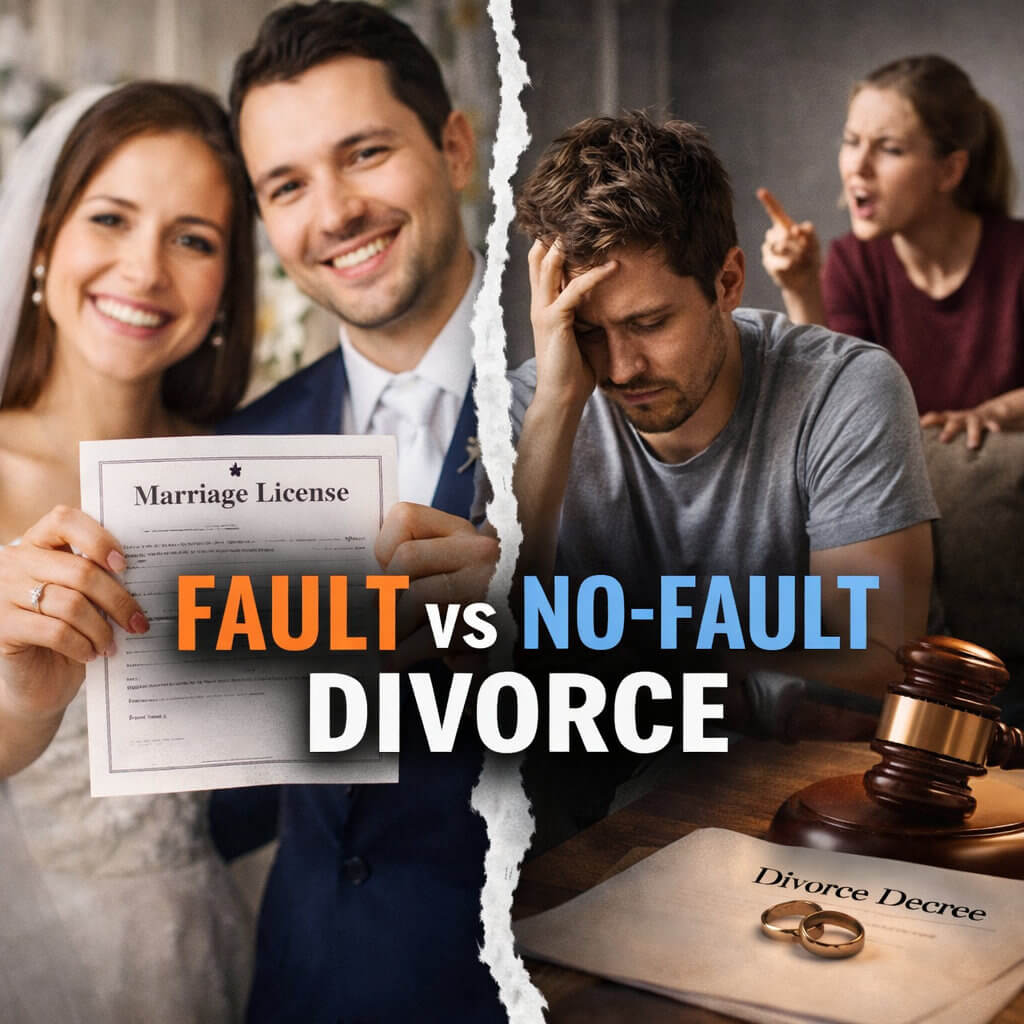 A proposal in Iowa has sparked renewed debate over the role of no-fault divorce in modern marriage law. Senate File 2172, introduced by Senator Jesse Green, would allow couples applying for a marriage license in Iowa to voluntarily waive the right to seek a no-fault divorce. While the bill ultimately did not advance this session, the arguments surrounding it reveal deep divisions about marriage, personal autonomy, and the function of family law. This seemed to me to be an interesting topic to discuss.
Under current law, Iowa follows the no-fault divorce model (similar to Ohio’s) adopted by most states in the 1970s. This system allows a marriage to be dissolved based on an irretrievable breakdown of the relationship, without requiring either spouse to prove wrongdoing. The proposed legislation would not eliminate no-fault divorce entirely. Instead, it would allow couples, at the time they apply for a marriage license, to jointly file a waiver. If they did so, a spouse seeking divorce would later have to prove specific fault grounds such as adultery, felony imprisonment, abandonment, abuse, or a two-year separation.
Supporters of the bill frame it as an expansion of personal freedom. They argue that couples who want a more binding form of marriage should be permitted to choose it. In their view, the law should respect deeply held moral or religious beliefs about the permanence of marriage. Some proponents contend that no-fault divorce has weakened marital commitment by making exit too easy, contributing to declining marriage rates and eroding accountability within relationships.
What are the Pros and Cons of Requiring Fault in Divorce?
Opponents, however, raise significant concerns. Domestic violence advocates argue that requiring proof of fault could endanger vulnerable spouses. For victims of abuse, having to gather evidence and litigate misconduct in court may increase trauma and risk. Critics warn that an abusive partner could use the legal process to delay proceedings or exert further control.
Family law attorneys also caution that moving away from no-fault divorce – even on a voluntary basis – would increase litigation. Fault-based divorces require evidence, witnesses, and often lengthy hearings. Before no-fault reforms were adopted nationwide, courts frequently saw fabricated or exaggerated claims, as couples felt compelled to assign blame in order to dissolve their marriages. Opponents argue that the modern system was designed precisely to reduce hostility, protect privacy, and ease court burdens.
Another concern centers on whether the waiver would truly be voluntary. While the bill allows couples to opt in jointly, critics point out that individuals rarely anticipate divorce at the time of marriage. Emotional, financial, or religious pressure could influence one partner’s decision to agree to the waiver. The question becomes whether the consent given at the beginning of a marriage meaningfully accounts for future circumstances.
Debates Over Fault in Divorce Unlikely to Disappear
The debate over fault vs no-fault divorce in Iowa also echoes policies in other states. A few states, including Louisiana and Arizona, offer “covenant marriage” options that impose stricter divorce requirements. These models provide some precedent, though participation rates have generally remained low.
Ultimately, the disagreement over Senate File 2172 reflects a broader tension in family law. On one side is the belief that marriage should be reinforced by higher legal barriers to exit, strengthening commitment and reflecting traditional values. On the other is the view that the law should prioritize safety, autonomy, and minimizing harm when relationships break down.
Although the bill did not advance this legislative session, the discussion over fault vs no-fault divorce, it sparked is unlikely to disappear. As debates over marriage, religion, and personal liberty continue to evolve, lawmakers and citizens alike will grapple with how best to balance commitment with individual freedom in the law governing intimate relationships.
PUBLISHER’S NOTE:
I want to thank Gloria Williams, a second-year law student at the University of Dayton School of Law for her work researching this article. Gloria has been clerking with MuesLaw this summer and is also continuing with us this semester too! Well done, Gloria!


© 2026, Ohio Family Law Blog. All rights reserved.

Attorney Robert “Chip” Mues has been focusing his legal practice throughout Southwest Ohio primarily in divorce and family law matters since 1978. Chip is passionate about family law and has proudly published the Ohio Family Law Blog since 2007. In addition, he previously managed the Dayton law firm of Holzfaster, Cecil, McKnight & Mues LPA until it dissolved on December 31, 2024. He founded MUESLAW in 2025. To learn more about him or MUESLAW, visit www.MuesLaw.com. Appointments are available in person, over the phone or by Zoom. Call us at 937 293-2141. He can be contacted by email at chip@mueslaw.com.