
Blast From The Past: How to Ask for a Prenuptial and Avoid a Break-Up!

By Robert "Chip" Mues   |   July 18th, 2020
Blast From The Past: How to Ask for a Prenuptial and Avoid a Break-Up!

PUBLISHERS NOTE: More people are executing prenuptial agreements than ever before. Millennials are getting married at a later age, many have a lot of student debt and more assets.  The COVID-19 pandemic is causing people to be more aware of their mortality and planning for the future. I thought reposting this “blast from the past” from June 17, 2017, about prenuptial agreements was appropriate.

Prenuptial Agreements have increased in recent years says study…but why?

Prenuptial agreements are daunting to bring up to one’s significant other and many individuals fear bringing up the topic. Many individuals worry that the prenuptial discussion will cause problems, such as making their significant other feel as if they are not trusted or as if there is an anticipation of a divorce in Ohio via a lack of commitment. However, research has shown that having a prenuptial agreement  may in fact strengthen a relationship. Did you know that According to a survey of the American Academy of Matrimonial Lawyers (AAML), 63 percent of divorce attorneys say they’ve seen an increase in prenuptial agreementsrecent years?… View Full Article → “Blast From The Past: How to Ask for a Prenuptial and Avoid a Break-Up!”


Can You Still Access Your Child’s Education Records After a Divorce?

By Robert "Chip" Mues   |   July 11th, 2020
Can You Still Access Your Child’s Education Records After a Divorce?

FERPA: What governs parental access to educational records?

The Family Educational Rights and Privacy Act (“FERPA“) is a federal statute that grants parents certain rights concerning their child’s educational records until the child turns 18 years old, at which point the rights transfer to the child. FERPA  has two main goals, one of which is to grant parents access to their children’s educational records. The other goal is to limit the access of outsiders to such records. The Ohio Student Records Privacy Act is the equivalent state statute. While the Ohio Student Records Privacy Act only applies to public schools in Ohio, FERPA applies to all educational agencies receiving federal funds.

The rights afforded to parents under both statutes include the right to access their child’s education records, to seek to have the education records amended, and some control over the disclosure of personally identifiable information from the education records.… View Full Article → “Can You Still Access Your Child’s Education Records After a Divorce?”

My Child Just Graduated High School. What are the Estate Planning Considerations?

By Joseph E. Balmer   |   July 4th, 2020
My Child Just Graduated High School. What are the Estate Planning Considerations?

Basic Estate Planning Documents For the Just-Turned 18 Year Old. Is it necessary?

High School graduation is a culmination of one’s academic accomplishments at a scholastic institution.  It is also usually a time of change.  Upon graduation, one’s life is going to change and progress into another phase.  It may also be a time of change when it comes to estate planning documents, both when it comes to the graduate and the graduate’s parents.

Parents are considered by law the natural guardians of their minor children.  Minor children are those under the age of 18.  Therefore, those under the age of 18 have no great need for estate planning documents .  However, what happens when one reaches the age of 18?  He or she is now a legal adult and the parents no longer have a legal right to speak on behalf of or act on behalf of the child.… View Full Article → “My Child Just Graduated High School. What are the Estate Planning Considerations?”

The First Amendment and the Digital Age: Can the Court stop you from posting online? The Ohio Supreme Court Addresses this Question

By Robert "Chip" Mues   |   June 27th, 2020
The First Amendment and the Digital Age: Can the Court stop you from posting online? The Ohio Supreme  Court Addresses this Question

Civil Stalking Protection Order (CSPO) Ruling In Ohio!

Ohio Supreme Court Rules on Civil Stalking Protection Order (CSPO) Usage, and Social Media First Amendment Rights

Social media sites have become important platforms for exercising free speech rights protected under the First Amendment of the U.S. Constitution. Despite overall agreement as to the importance of such platforms, there is debate over the extent to which such speech can be restricted. One side argues that there are not enough measures in place to protect against violent or false content, while the other argues that such measures could unfairly restrict potentially valuable content.

On June 16, 2020, the Ohio Supreme Court spoke on this controversy in its decision, Bey v. Rasawehr, Slip Opinion No. 2020-Ohio-3301, where the Court held that a civil stalking protection order (CSPO) restricting future postings imposed an unconstitutional prior restraint on protected speech. Click here to read the opinion.… View Full Article → “The First Amendment and the Digital Age: Can the Court stop you from posting online? The Ohio Supreme Court Addresses this Question”

Supreme Court Rules: LGBTQ People are Protected from Job Discrimination

By Robert "Chip" Mues   |   June 20th, 2020
Supreme Court Rules: LGBTQ People are Protected from Job Discrimination

Divided Supreme Court Rules On Sex Discrimination Protection For LGBT Workers

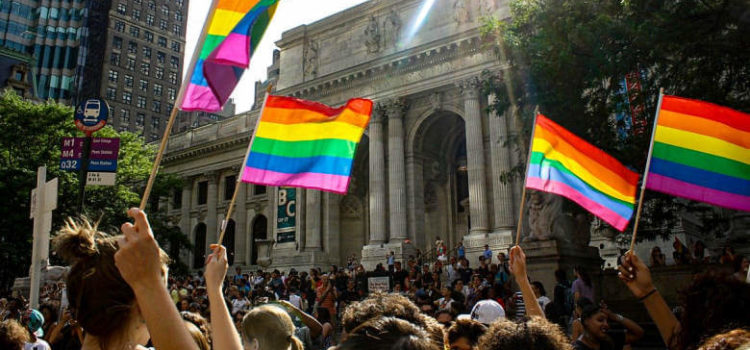
In a landmark ruling, a divided Supreme Court ruled on June 15, 2020 that the 1964 Civil Rights Act barring sex discrimination in the workplace also protects LGBTQ employees from being fired because of their sexual orientation. The case, Bostock v. Clayton County, Georgia can be accessed by clicking here. The court decided by a 6-3 vote that a key protection of the Civil Rights Act  of 1964 known as Title VII that bars job discrimination because of sex also encompasses discrimination against LGBT workers.

The decision was written by Associate Justice Neil Gorsuch (who was appointed to the Court by President Trump). Chief Justice John Roberts also joined the court’s four liberal justices composing the majority. Dissenting were Associate Justices Samuel Alito, Clarence Thomas and Brett Kavanaugh.

“An employer who fires an individual for being homosexual or transgender fires that person for traits or actions it would not have questioned in members of a different sex,” Justice Neil Gorsuch wrote for the court.View Full Article → “Supreme Court Rules: LGBTQ People are Protected from Job Discrimination”

Child Visitation Exchanges – Tips to Avoid Problems!

By Robert "Chip" Mues   |   June 13th, 2020
Child Visitation Exchanges – Tips to Avoid Problems!

Visitation Exchanges. Do this to Avoid Friction with your Ex!

Visitation exchanges and custody exchanges can be uncomfortable and sometimes downright combative depending upon the relationship between the parents. They can also be stressful to your child as well. The overall objective needs to be to keep things civil and reduce friction all the way around.

Here are some common-sense tips of what to do, or not do in visitation exchanges:
  1. Coordinate Drop Off/Pick Up Location: In high conflict cases, the less you have to interact with your Ex the better. One common approach is agreeing upon making the switch at school, a daycare center, babysitters or friend’s house.  Other options are at a public place such as a park or restaurant. In extreme situations, some folks will make the exchange outside the local police department. You need to figure a spot that is practical and reduces possible danger
  2. Bring a Third Party: Some folks will bring a witness to observe the drop off/pickups and to act as an observer and help reduce any friction.
View Full Article → “Child Visitation Exchanges – Tips to Avoid Problems!”

Study Finds that Same-Sex Weddings have Generated $3.8 billion Over the Last 5 Years

By Robert "Chip" Mues   |   June 6th, 2020
Study Finds that Same-Sex Weddings have Generated $3.8 billion Over the Last 5 Years

Same-Sex weddings Have Generated Billion in Local and State Economic Activity in U.S. According to Study

It is estimated that there are 513,000 married same-sex couples in the United States. There are 28 United Nations’ member states that recognize the right of same-sex individuals to marry.  According to a study released on May 25, 2020 by the Williams Institute on Sexual Orientation and Gender Identity Law at UCLA , same-sex weddings have generated $3.8 billion in local and state economic activity in the United States since the Supreme Court legalized gay marriage five years ago this month in Obergefell v. Hodges. Click here to read the Supreme Court decision.

In June 2015, when the Supreme Court issued its decision in Obergefell, there were an estimated 242,000 same-sex married couples in the U.S. The number of married same-sex couples has more than doubled since then. An estimated 513,000 same-sex couples are married as of March 2020.… View Full Article → “Study Finds that Same-Sex Weddings have Generated $3.8 billion Over the Last 5 Years”

Page 43 of 128
1 39 40 41 42 43 44 45 46 47 128